


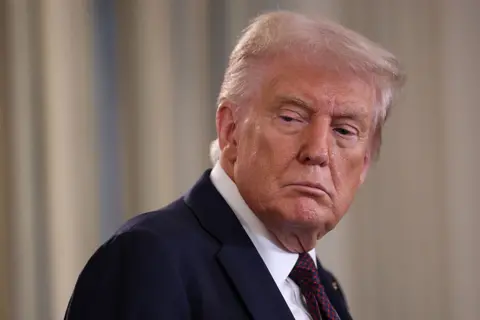
Our nation's judicial body starts its current term on Monday featuring an schedule presently packed with likely significant cases that may determine the limits of executive executive power – and the prospect of further issues to come.
Throughout the recent period after Trump came back to the Oval Office, he has tested the constraints of presidential authority, independently enacting recent measures, cutting federal budgets and staff, and trying to place previously autonomous bodies further within his purview.
Constitutional Conflicts Concerning National Guard Use
The latest developing judicial dispute arises from the White House's efforts to take control of state National Guard units and send them in metropolitan regions where he alleges there is public unrest and escalating criminal activity – over the opposition of local and state officials.
Across Oregon, a federal judge has delivered directives halting Trump's mobilization of troops to that region. An higher court is scheduled to examine the decision in the next few days.
"Ours is a nation of legal principles, rather than army control," Jurist the presiding judge, whom Trump nominated to the bench in his previous administration, declared in her latest ruling.
"Defendants have offered a range of arguments that, if upheld, risk weakening the line between civil and defense federal power – to the detriment of this country."
Shadow Docket Might Decide Military Power
After the appeals court makes its decision, the High Court may get involved via its so-called "shadow docket", delivering a ruling that could restrict the President's power to deploy the armed forces on American territory – alternatively give him a broad authority, in the short term.
Such processes have turned into a regular phenomenon recently, as a larger part of the court members, in response to expedited appeals from the Trump administration, has generally permitted the administration's measures to move forward while legal challenges unfold.
"A continuous conflict between the justices and the district courts is going to be a key factor in the upcoming session," Samuel Bray, a instructor at the Chicago law school, said at a meeting recently.
Criticism About Emergency Review
Judicial use on this expedited system has been challenged by liberal legal scholars and politicians as an improper application of the legal oversight. Its rulings have often been short, offering limited legal reasoning and leaving behind district court officials with little instruction.
"The entire public should be concerned by the High Court's growing reliance on its expedited process to settle contentious and high-profile matters absent any form of clarity – without detailed reasoning, courtroom debates, or rationale," Politician the New Jersey senator of his constituency stated in recent months.
"It additionally moves the Court's considerations and judgments away from public oversight and protects it from answerability."
Full Reviews Approaching
During the upcoming session, though, the justices is set to confront questions of presidential power – along with other notable disputes – head on, conducting courtroom discussions and issuing full decisions on their merits.
"It's unable to have the option to short decisions that fail to clarify the rationale," said a professor, a scholar at the Harvard University who focuses on the judiciary and US politics. "When the justices are planning to grant more power to the administration its will need to explain the reason."
Significant Cases featured in the Docket
Judicial body is presently planned to consider whether federal laws that bar the head of state from removing officials of agencies designed by Congress to be autonomous from White House oversight undermine presidential power.
Judicial panel will additionally hear arguments in an accelerated proceeding of Trump's effort to fire a Federal Reserve governor from her role as a official on the influential Federal Reserve Board – a dispute that might significantly increase the chief executive's power over US financial matters.
The nation's – along with international economy – is also a key focus as judicial officials will have a opportunity to determine if a number of of the President's solely introduced tariffs on overseas products have sufficient legal authority or ought to be voided.
Court members may also examine the President's moves to independently cut federal spending and dismiss junior public servants, as well as his forceful migration and removal strategies.
While the court has so far not decided to review Trump's bid to terminate birthright citizenship for those born on {US soil|American territory|domestic grounds


