


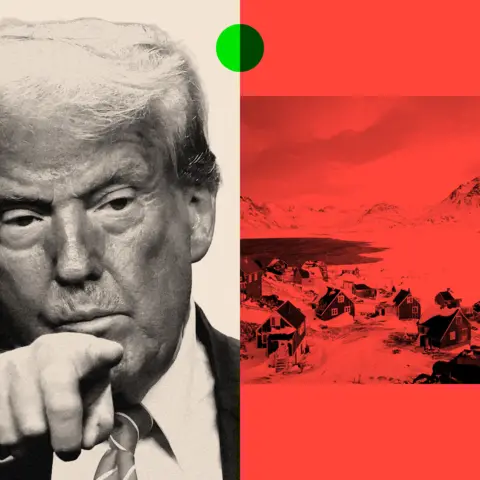
This very day, a so-called Alliance of the Determined, largely consisting of EU leaders, met in the French capital with envoys of the Trump administration, attempting to secure more advances on a durable settlement for the embattled nation.
With Ukraine's President Volodymyr Zelensky declaring that a plan to halt the hostilities with Russia is "90% of the way there", not a single person in that room wished to jeopardise maintaining the Washington involved.
Yet, there was an colossal elephant in the room in that grand and luxurious Paris meeting, and the fundamental tension was profoundly strained.
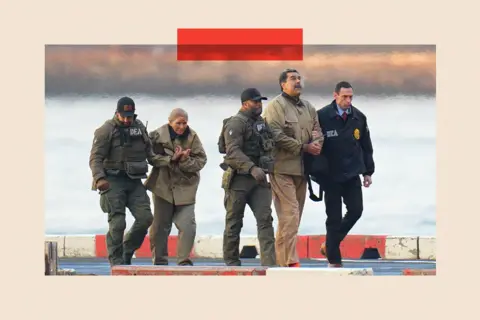
Consider the developments of the last few days: the US administration's controversial incursion in the South American nation and the President Trump's insistence following this, that "our national security requires Greenland from the standpoint of national security".
Greenland is the world's greatest island – it's 600% the dimensions of Germany. It is situated in the Arctic but is an semi-independent territory of Denmark's.
At the conference, Mette Frederiksen, the Danish Prime Minister, was seated across from two key figures speaking on behalf of Trump: emissary Steve Witkoff and Trump's adviser Jared Kushner.
She was under pressure from her EU counterparts to avoid provoking the US over Greenland, lest that affects US assistance for the Ukrainian cause.
Europe's leaders would have greatly desired to separate the Arctic dispute and the discussions on the war distinct. But with the political temperature mounting from the White House and Copenhagen, representatives of big European nations at the Paris meeting released a communiqué asserting: "Greenland is part of the alliance. Stability in the North must therefore be achieved collectively, in conjunction with NATO allies including the United States".
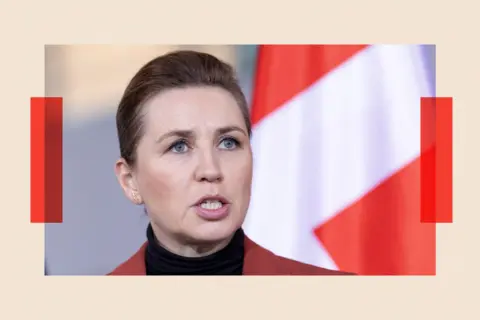
"The decision is for Copenhagen and the Greenlandic authorities, and them alone, to rule on matters concerning the kingdom and Greenland," the declaration continued.
The statement was welcomed by Greenland's prime minister, Jens Frederik Nielsen, but analysts contend it was slow to be drafted and, owing to the restricted group of signatories to the statement, it was unable to project a Europe in agreement in objective.
"Were there a joint position from all 27 member states, along with NATO ally the UK, in support of Danish sovereignty, that would have sent a resounding message to America," noted a European defense analyst.
Consider the paradox at hand at the France meeting. Several European government and other officials, including NATO and the EU, are attempting to involve the US administration in guaranteeing the future autonomy of a continental state (the Eastern European nation) against the hostile land claims of an outside force (Moscow), on the heels of the US has swooped into sovereign Venezuela by armed intervention, arresting its head of state, while also continuing to publicly threatening the sovereignty of a different EU member (the Kingdom of Denmark).
To compound the situation – Copenhagen and the US are both members of the defensive pact the North Atlantic Treaty Organization. They are, in the view of Copenhagen, profoundly strong partners. Previously, they were considered so.
The question is, should Trump act upon his desire to assert control over the island, would it represent not just an existential threat to NATO but also a major problem for the EU?
Europe Faces the Danger of Being Trampled Underfoot
This is far from the first instance President Trump has voiced his determination to dominate Greenland. He's floated the idea of acquiring it in the past. He's also refused to rule out a military seizure.
Recently that the landmass is "so strategic right now, Greenland is frequented by foreign ships all over the place. Our security demands Greenland from the perspective of defense and Copenhagen is unable to handle it".
Copenhagen refutes that assertion. It not long ago pledged to spend $4bn in Greenland defence encompassing boats, drones and aircraft.
Pursuant to a mutual pact, the US maintains a strategic outpost already on the island – founded at the start of the Cold War. It has scaled down the number of staff there from about 10,000 during peak Cold War operations to around 200 and the US has frequently been criticized of overlooking Arctic Security, until now.
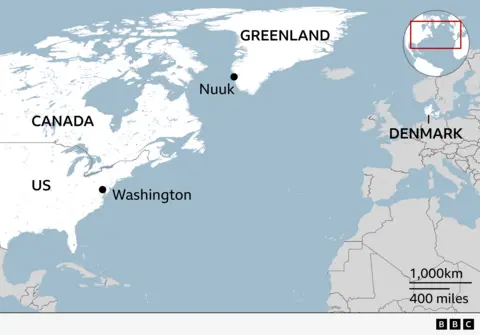
Copenhagen has signaled it is willing to talk about a bigger US role on the island and more but faced with the US President's assertion of independent moves, Frederiksen said on Monday that Washington's desire to control Greenland should be treated with gravity.
After the US administration's actions in Venezuela this past few days, her colleges in Europe are heeding that warning.
"This whole situation has just emphasized – yet again – Europe's basic vulnerability {


